
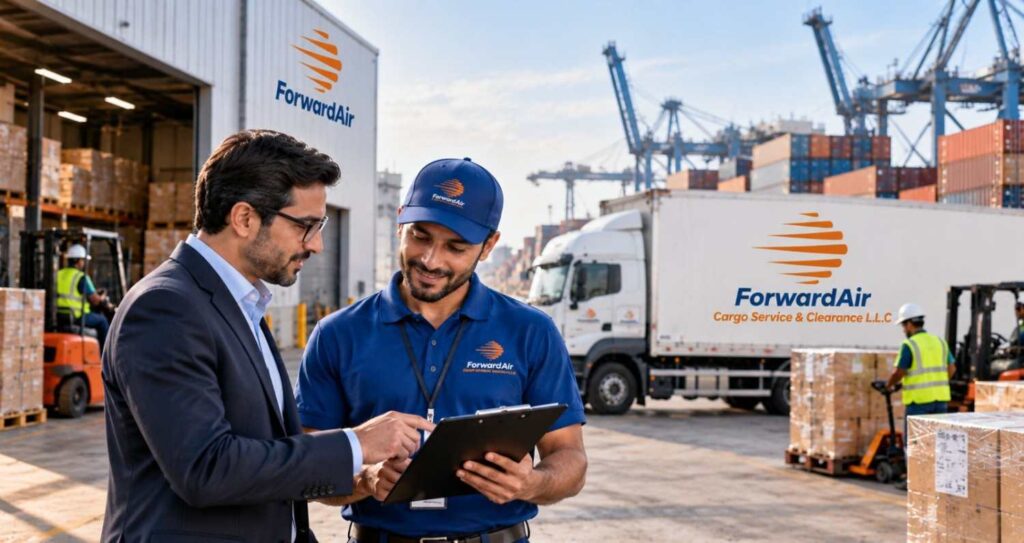
For a growing business, logistics may begin with a few straightforward tasks: arranging transport, moving goods and making sure deliveries arrive on schedule. As shipment volumes grow, that simple process can quickly become much harder to manage.
There are vehicles to maintain, warehouse space to organise, drivers to coordinate, documents to prepare, customs requirements to follow and customers who expect accurate delivery updates. For companies trading across the UAE and GCC, the workload becomes even more demanding when shipments cross borders.
This is one reason businesses increasingly work with professional Cargo Services in Dubai and third-party logistics (3PL) providers rather than building every logistics function in-house.
The decision is not simply about convenience. Outsourcing can give businesses access to established transportation networks, logistics expertise, warehousing, customs support and shipment coordination without requiring them to build and maintain all of those capabilities themselves.
Growing Complexity of Business Logistics in Dubai
Dubai’s position as a major international trade and logistics hub gives businesses access to ports, airports, free zones and regional road networks. At the same time, operating within such a connected environment requires careful coordination.
A shipment moving from Dubai to another GCC market, for example, may involve transportation planning, customs documentation, border procedures, cargo handling and final delivery. International shipments can introduce additional requirements depending on the destination and type of goods.
Businesses operating in and around major commercial areas therefore have to consider more than simply moving products from one place to another. They need dependable transportation, accurate documentation, shipment visibility and the ability to respond when demand changes.
For many companies, handling all of this internally can take considerable time and resources away from the core business.
Lower Infrastructure and Operational Costs
Running logistics in-house requires more than maintaining a few delivery vehicles.
A company may need warehouse space, vehicles, loading equipment, insurance, maintenance arrangements, security, trained drivers and logistics personnel. Technology can add another layer of expense, particularly when businesses need systems for transportation management, inventory visibility and shipment tracking.
Professional cargo providers already operate with established logistics infrastructure and transportation networks. They can also spread operational resources across multiple customers, which can make certain services more economical than maintaining equivalent capacity independently.
The result is a different cost structure.
Instead of carrying the full expense of maintaining logistics infrastructure throughout the year, a business can use external services according to its shipment volume and operational requirements.
The distinction becomes especially valuable for companies whose shipment volumes rise and fall throughout the year. During a busy period, additional transportation or storage capacity may be required. During quieter months, maintaining that same capacity may not make financial sense.
Access to Experienced Logistics Professionals
Moving the cargo is only one part of the logistics process.
An experienced logistics team has to deal with much more than transportation, including documentation, cargo handling, routing, customs procedures and delivery coordination. The requirements can also vary considerably depending on the cargo, destination and transport mode.
This experience becomes particularly useful when dealing with international shipments, vehicles, sensitive cargo, oversized loads or time-critical deliveries.
Forward Air Cargo provides a range of freight and logistics services covering air, sea and land transportation, along with customs clearance, warehousing, packing and moving, door-to-door cargo and other related services. Its company information also states that its packing crews have at least five years of experience, while crew leaders have more than ten years in the trade.
For a business without a dedicated logistics department, access to this type of experience can reduce the amount of day-to-day coordination required internally.
Greater Flexibility When Business Demand Changes
Fixed capacity is one of the main challenges of running logistics entirely in-house.
A warehouse may be partly empty during a quiet period while still generating rent and operating expenses. A fleet can face a similar problem. When orders suddenly increase, the business may find itself short of vehicles, storage space or staff.
Working with a logistics provider gives businesses more flexibility when those requirements change.
A company may need additional transportation during seasonal sales, Ramadan, a new product launch or a temporary increase in export orders. At other times, its requirements may drop significantly. Using an external logistics partner allows businesses to adjust their logistics requirements without rebuilding the entire operation each time demand changes.
This flexibility can be particularly useful for e-commerce businesses, distributors, manufacturers and companies expanding into new GCC markets.
Less Time Spent on Customs and Documentation
Customs is another area where a small documentation error can turn into a much larger delay.
Import and export shipments may require commercial invoices, packing lists, certificates of origin, customs declarations and other supporting documents depending on the cargo and destination. Cross-border shipments within the GCC may also involve specific procedures and documentation.
Dubai Customs, for example, provides customs declaration and clearance services for import, export, transit, transfer and temporary admission movements.
A professional logistics provider can coordinate documentation and customs-clearance requirements as part of the shipment rather than leaving the business to manage every stage separately.
A delay at a port or border crossing can affect much more than the shipment in question. Inventory may arrive late, production schedules can be disrupted and customers may receive their orders later than expected.
Forward Air Cargo states that it provides customs clearance and inspection services, commercial documentation support, import-code services and transportation-related logistics under one service offering.
Multiple Transportation Options Under One Service
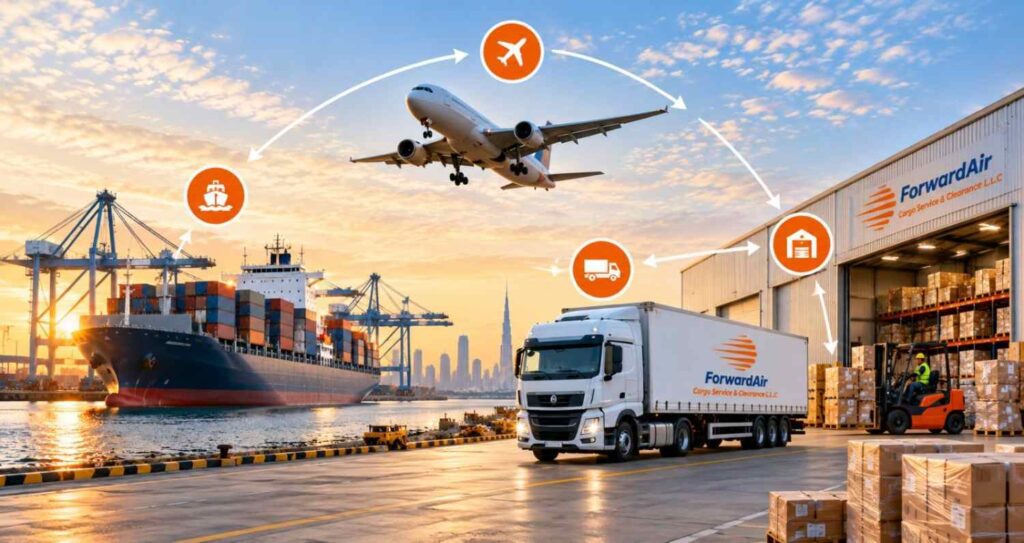
The most suitable transport mode depends on the shipment.
Each shipment has different priorities, so the choice of transport depends on factors such as urgency, cargo volume, destination and budget. Air freight is often considered for time-sensitive deliveries, while sea freight can be a practical option for larger or heavier consignments. For movements within the UAE and across GCC countries, road transport provides an important connection between ports, warehouses, businesses and final destinations.
Managing all of these modes internally would require relationships, operational knowledge and resources across different parts of the transportation industry.
Professional Cargo Companies in Dubai can coordinate different freight modes based on the cargo, destination and delivery requirements instead of relying on a single transport option.
Forward Air Cargo’s documented services include sea, land and air freight, FCL and LCL sea services, FTL/LTL land transportation, air cargo, RoRo, consolidation, warehousing and selected door-to-door services.
Having several options available under one logistics provider can make it easier for businesses to balance delivery schedules, cargo requirements and transportation costs.
Better Shipment Visibility and Coordination
Delivery expectations have changed. Customers increasingly want visibility as well as a reliable delivery time.
That expectation has made shipment visibility an important part of modern logistics. Businesses need to know whether cargo has been collected, where it is moving and whether there are issues that could affect the delivery schedule.
Professional logistics providers can offer tracking and shipment updates without requiring every business to develop its own logistics technology infrastructure.
Forward Air Cargo states that it provides shipment tracking and regular updates as part of its logistics services. Its transport management service also describes a single point of contact for customers and suppliers, helping reduce the time and effort involved in coordinating transportation.
For businesses managing several shipments at the same time, better visibility can make planning and customer communication considerably easier.
Easier Access to International and GCC Markets
Expanding beyond the UAE can open new markets, but it also brings additional logistics and cross-border requirements.
A company entering Saudi Arabia, Oman, Qatar or another international market needs to consider transportation routes, documentation, customs procedures and final delivery arrangements. Building this knowledge and network internally can take considerable time.
An established logistics provider already works with transportation networks and international partners, giving businesses access to a wider logistics footprint.
Forward Air Cargo states that its network covers the GCC, Asia, Africa, South America, North America, European ports, Australia, New Zealand and the Far East. Its listed services also include land transportation to GCC and other Middle Eastern destinations, alongside international air and sea freight.
For a company entering a new market or increasing export volumes, using an established logistics network can be more practical than building one from scratch.
More Time to Focus on the Core Business
Another important benefit is the management time that outsourcing can free up.
Logistics requires regular attention. Someone has to follow shipments, coordinate transportation, resolve delivery issues, manage documentation and communicate with carriers or customers.
Those responsibilities can become a significant distraction when the company’s main priority is selling products, serving customers, developing new offerings or entering new markets.
Outsourcing does not mean giving up oversight. Businesses should still monitor service quality, costs, delivery performance and communication. The difference is that logistics becomes an externally managed function, allowing the business to concentrate its internal resources on areas directly tied to growth.
When Should a Business Consider Outsourcing Logistics?
There is no universal point at which a business needs to outsource its logistics. The decision usually becomes more compelling when logistics starts consuming too much capital, staff time or management attention.
Businesses may want to consider professional logistics services when:
- Shipment volumes are increasing quickly.
- Logistics costs are becoming difficult to control.
- The business needs additional warehouse or transportation capacity.
- Shipments regularly cross UAE or GCC borders.
- Customs documentation is taking too much internal time.
- Customers expect shipment tracking and faster delivery.
- Seasonal demand creates significant changes in logistics requirements.
- The company is entering new international markets.
- Internal teams are spending too much time resolving transportation issues.
In these situations, comparing the total cost of an in-house operation with the price, capabilities and flexibility offered by a logistics provider can make the decision clearer.
How to Choose Among Cargo Companies in Dubai
Cost is important, but it should be considered alongside service capability and reliability.
Businesses should look at the provider’s transportation options, customs expertise, geographic coverage, cargo-handling capabilities, tracking systems, warehouse facilities and communication standards. Experience with similar types of shipments can also make a significant difference.
It is worth asking how the provider handles less routine requirements. Can it arrange transportation for temperature-sensitive cargo? Does it support heavy or oversized shipments? Can it manage vehicle transportation, door-to-door delivery or international moving when required?
The provider’s ability to coordinate several services can also be important. Forward Air Cargo, for example, describes itself as a one-stop logistics provider, with services spanning sea, land and air freight, customs clearance, warehousing, moving, vehicle handling and other cargo requirements.
A provider with broader capabilities may offer better overall value than a lower-priced service that leaves the business dependent on several separate vendors.
Final Thoughts
For businesses operating in Dubai and across the GCC, logistics has a direct impact on costs, delivery performance and customer experience.
Managing transportation, warehousing, customs and shipment coordination internally can provide control, but it also requires ongoing investment in people, infrastructure and operational resources.
Professional cargo services provide an alternative: businesses can access established logistics capabilities without taking on the full burden of operating them internally.
The right logistics partner should make the supply chain easier to manage, provide suitable transportation options and support the business as shipment requirements change.
For businesses looking for reliable Cargo Companies in Dubai, the more useful question is whether managing every logistics function internally still makes commercial sense when experienced providers and established infrastructure are already available.