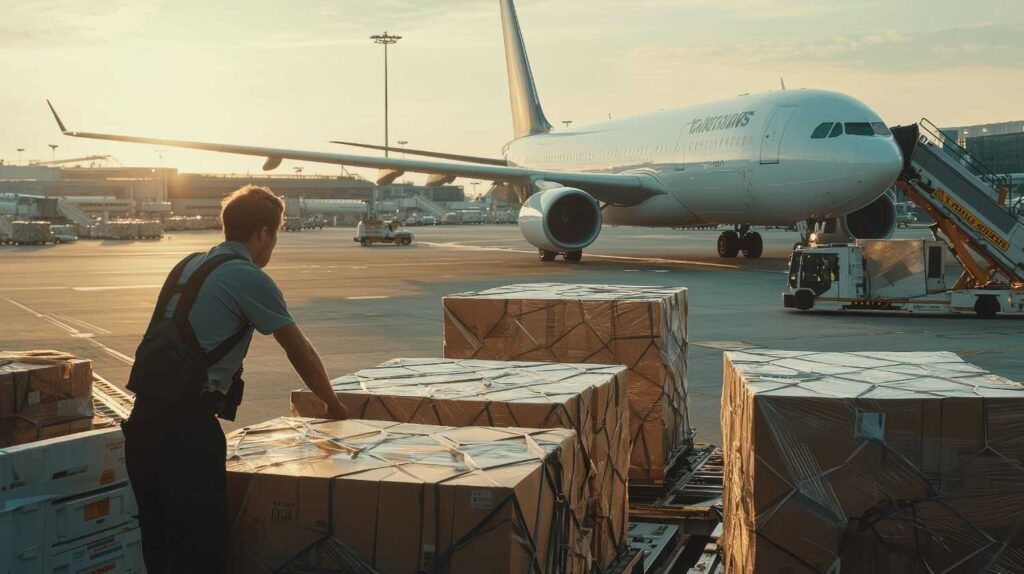
A shipment doesn’t have to be delayed for days to create problems. Sometimes, arriving just a few hours late is enough to disrupt an entire supply chain.
A manufacturer waiting for replacement machinery parts may have to pause production. A retailer expecting seasonal inventory could miss a sales opportunity. For pharmaceutical companies, delayed medical supplies can have far more serious consequences. In today’s fast-moving business environment, every shipment is often tied to a deadline, making speed and reliability equally important.
This is exactly why express air freight has become an essential logistics solution for businesses operating in global markets. Unlike conventional shipping methods that prioritise cost over transit time, express air freight is designed for cargo that simply cannot afford unnecessary delays. From urgent spare parts and high-value electronics to medical supplies and time-sensitive commercial goods, businesses rely on air freight to keep operations running without interruption.
Dubai has positioned itself at the centre of this global movement. With world-class aviation infrastructure, advanced customs procedures, extensive airline connectivity, and a logistics ecosystem built around international trade, the city enables businesses to move cargo quickly across almost every major market.
Choosing the right air freight company in Dubai therefore involves much more than finding the fastest available flight. It means working with a logistics partner that can coordinate documentation, customs clearance, cargo handling, airline scheduling, and final delivery with precision. When every stage works together efficiently, businesses gain more than faster shipping—they gain confidence that their supply chains will continue moving even under tight deadlines.
Why Businesses Are Turning to Express Air Freight
Global supply chains have changed significantly over the past decade. Businesses now carry leaner inventories, customers expect shorter delivery times, and manufacturers increasingly depend on just-in-time production models. As a result, the margin for delay has become much smaller than it once was.
While sea freight remains the most economical option for large-volume cargo, it isn’t always practical for urgent shipments. Waiting several weeks for replacement equipment or critical inventory can create costs that far exceed the price difference between sea and air transport.
Express air freight helps businesses respond to these situations by reducing transit times while maintaining greater control over the shipping process.
This has made it particularly valuable for industries such as healthcare, electronics, automotive manufacturing, aerospace, retail, and e-commerce, where delays can affect production schedules, customer commitments, or product availability.
In many cases, businesses are no longer choosing air freight simply because it is faster. They are choosing it because it offers greater certainty when timing matters most.
Why Dubai Continues to Lead Global Air Cargo Operations
Dubai’s location between Asia, Europe, and Africa certainly gives it a geographical advantage, but geography alone is not what has made the city one of the world’s most important logistics hubs.
Its success comes from decades of investment in aviation infrastructure, customs modernisation, and integrated logistics networks that allow cargo to move efficiently across international borders.
Today, businesses shipping through Dubai benefit from an ecosystem where airports, ports, free zones, customs authorities, and logistics providers operate in close coordination rather than as separate entities.
This level of integration reduces unnecessary delays while creating multiple routing options for international shipments.
For businesses moving urgent cargo across different continents, that flexibility can make a significant difference.
A Dual-Airport System Designed for Speed
Unlike many international logistics centres that rely heavily on a single airport, Dubai operates two major aviation hubs, each supporting different aspects of air cargo operations.
Dubai International Airport (DXB) remains one of the world’s busiest international airports and provides exceptional global connectivity through hundreds of daily passenger and cargo flights. Because many passenger aircraft also carry commercial cargo, businesses gain access to frequent departures across major international destinations, making urgent shipments easier to schedule.
Complementing DXB is Al Maktoum International Airport (DWC), located within Dubai South. Developed with future cargo growth in mind, DWC focuses heavily on dedicated freighter operations, oversized cargo, and expanding e-commerce volumes. Its modern facilities provide additional capacity while supporting more complex logistics requirements that continue to grow across the region.
Together, these airports create a highly flexible air freight network capable of supporting both routine commercial shipments and time-critical cargo.
More Than Airports: Dubai’s Connected Logistics Ecosystem
One of the reasons express air freight performs so efficiently in Dubai is that cargo rarely moves through the airport in isolation.
The city’s logistics infrastructure has been designed to connect ports, airports, free zones, and distribution centres into a single operational network.
A good example is the Dubai Logistics Corridor, which links Jebel Ali Port, JAFZA, and Al Maktoum International Airport. This connection allows cargo arriving by sea to be transferred quickly to air freight whenever delivery deadlines change.
Imagine a shipment leaving Asia on a container vessel bound for Europe. Midway through the journey, production schedules change, and the customer needs the goods much sooner than expected. Instead of allowing the shipment to continue entirely by sea, part of the cargo can be transferred through Dubai and placed on an international flight, significantly reducing overall transit time.
This ability to combine different transport modes has become increasingly valuable for businesses looking to balance shipping costs with delivery speed.
Rather than treating logistics as separate sea, road, and air operations, Dubai enables businesses to use each transport method where it delivers the greatest value.
Speed Starts Long Before the Aircraft Takes Off
Many people assume that express air freight is simply about putting cargo onto an aircraft as quickly as possible.
In reality, much of the speed is achieved before the shipment even reaches the airport.
Experienced freight forwarders begin by carefully reviewing shipment details, delivery deadlines, cargo specifications, destination requirements, and airline availability. These early decisions determine whether the shipment moves smoothly through the supply chain or encounters avoidable delays later.
Documentation also plays a far greater role than many businesses realise.
A missing commercial invoice, incorrect HS code, inaccurate cargo description, or incomplete Air Waybill can delay a shipment longer than the flight itself. For this reason, experienced logistics providers verify documentation before cargo leaves the customer’s premises rather than attempting to resolve issues during customs clearance.
Careful planning at the beginning of the shipment often saves far more time than trying to recover lost time later.
Priority Handling Makes a Significant Difference
Express air freight follows a different operational workflow from standard cargo shipments.
Rather than waiting for cargo consolidation or less urgent scheduling windows, express shipments are prioritised throughout the logistics process.
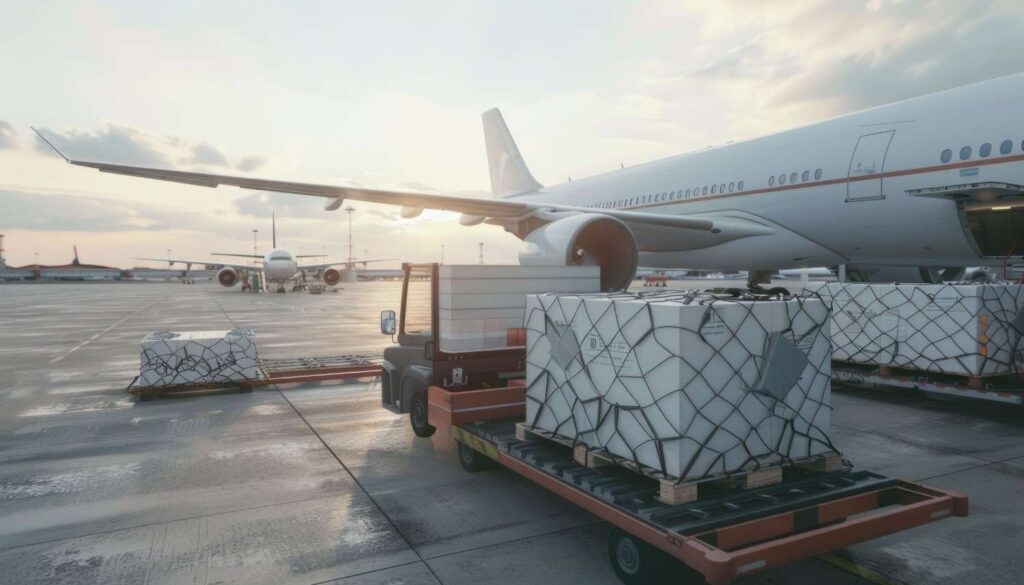
Once cargo reaches the airport, dedicated handling teams move it through acceptance, security screening, sorting, and airline processing as efficiently as possible. Many logistics providers also work closely with multiple airline partners, allowing them to secure earlier departures or identify alternative routes whenever unexpected disruptions occur.
This flexibility becomes particularly important during peak shipping seasons when cargo capacity is under greater pressure.
Businesses working with an experienced air freight company in Dubai benefit not only from faster transportation but also from stronger airline relationships, better operational coordination, and quicker decision-making whenever shipment plans need to change.
Digital Customs Processing Keeps Cargo Moving
The fastest aircraft in the world cannot compensate for paperwork that isn’t ready.
In international shipping, customs clearance is often the point where shipments lose valuable time. Missing documents, incorrect product classifications, or incomplete declarations can hold cargo long after it has landed. This is why experienced logistics providers place so much emphasis on documentation before the shipment even reaches the airport.
Dubai has made significant progress in modernising this part of the logistics chain. Through digital customs platforms, electronic documentation, and pre-arrival processing, many shipments can begin the clearance process before the aircraft touches down. Customs authorities receive shipment information in advance, allowing risk assessments and document verification to start while the cargo is still in transit.
For businesses, this translates into shorter waiting times, faster cargo release, and fewer administrative bottlenecks.
Of course, technology alone is not enough. Accurate documentation remains essential. Commercial invoices, Air Waybills, packing lists, certificates of origin, and correct HS code classifications all need to be prepared carefully. Even a small discrepancy can trigger additional inspections or clearance delays.
This is where working with an experienced air freight company in Dubai becomes particularly valuable. A knowledgeable logistics partner understands local customs procedures, anticipates compliance requirements, and helps ensure shipments move through the clearance process as efficiently as possible.
Visibility Has Become Part of Good Customer Service
For many businesses, knowing where a shipment is can be just as important as knowing when it will arrive.
Supply chain managers, procurement teams, and customers all expect timely updates throughout the shipping journey. Waiting several hours—or even an entire day—for a manual status update is no longer practical in an environment where business decisions often depend on real-time information.
Modern express air freight providers address this by offering digital shipment visibility from collection through final delivery. Using Air Waybill (AWB) tracking and integrated logistics platforms, businesses can monitor key shipment milestones, including airport acceptance, flight departure, customs clearance, and destination handling.
More importantly, this visibility allows businesses to respond proactively when circumstances change. If weather conditions affect a flight schedule or customs requires additional information, those updates can be communicated early, giving supply chain teams time to adjust production schedules, delivery commitments, or inventory planning.
Reliable communication has become a competitive advantage in logistics. Businesses are not simply paying for transportation—they are investing in confidence and predictability.
Technology Is Quietly Reshaping Air Freight Operations
Much of what makes today’s express air freight more reliable happens behind the scenes.
Artificial intelligence, automation, and data-driven decision-making are gradually changing how logistics providers plan shipments, allocate cargo space, and respond to unexpected disruptions.
AI-powered planning systems can evaluate multiple variables simultaneously, including airline schedules, weather forecasts, airport congestion, and historical shipment performance. Instead of reacting to delays after they occur, logistics teams can identify alternative routes before a disruption affects delivery.
Internet of Things (IoT) technology is also becoming increasingly common for sensitive shipments. Small monitoring devices attached to cargo can continuously record location, temperature, humidity, and shock levels throughout the journey. This information is particularly valuable when transporting pharmaceuticals, medical equipment, electronics, or other products where environmental conditions directly affect quality.
Automation is making an equally important contribution. Smart cargo screening, digital warehouse operations, and automated handling systems reduce manual processes while improving speed and consistency inside airport cargo facilities.
Although customers may never see these technologies in action, they are helping logistics providers deliver faster, more accurate, and more dependable services every day.
Some Shipments Need More Than Speed
Express air freight is often associated with urgent deliveries, but urgency is only one part of the equation.
Many shipments require specialised handling long before they are loaded onto an aircraft.
Pharmaceutical products must remain within carefully controlled temperature ranges throughout transit. High-value electronics demand enhanced security to minimise the risk of theft or damage. Dangerous goods must comply with strict International Air Transport Association (IATA) regulations covering packaging, labelling, and documentation before airlines will accept them for transport.
Oversized industrial equipment presents another challenge. While these shipments require more planning than standard cargo, dedicated freighter aircraft make it possible to move critical machinery, replacement parts, and project cargo quickly when production schedules depend on immediate delivery.
Handling these shipments successfully requires operational expertise rather than simply access to aircraft. Understanding regulatory requirements, selecting the right equipment, and coordinating specialised handling procedures are all part of ensuring cargo reaches its destination safely and on time.
Reliability Is Proven When Challenges Arise
Every logistics network faces disruption from time to time.
Peak shipping seasons can reduce airline capacity. Weather conditions may force flight rescheduling. Regulatory changes can affect customs procedures, while geopolitical developments occasionally require carriers to adjust international routes.
These situations cannot always be avoided, but they can be managed effectively.
Experienced freight forwarders prepare contingency plans, maintain relationships with multiple airline partners, and monitor global shipping conditions continuously. If one route becomes unavailable, alternative options can often be arranged with minimal impact on delivery schedules.
The same proactive approach applies to documentation. Careful verification before cargo departs helps prevent avoidable customs delays that might otherwise interrupt the entire shipment.
In practice, reliability is not measured by how often challenges occur. It is measured by how effectively logistics providers respond when they do.
Choosing the Right Logistics Partner
Businesses often compare freight rates when selecting a logistics provider, but cost alone rarely determines the success of an international shipment.
An efficient logistics operation depends on accurate planning, strong airline relationships, customs expertise, responsive communication, and consistent execution across every stage of the supply chain.
When evaluating an air freight company in Dubai, businesses should look beyond pricing and consider operational capabilities. A provider with experience in international air freight, specialised cargo handling, customs clearance, warehousing, and end-to-end logistics coordination is better equipped to manage unexpected situations while maintaining reliable delivery performance.
Long-term logistics partnerships are built on trust, transparency, and operational consistency. These qualities often deliver far greater value than choosing the lowest shipping rate.
Final Thoughts
Express air freight has become far more than a premium shipping option. For many businesses, it is an essential part of maintaining operational continuity in an increasingly time-sensitive global marketplace.
Dubai has earned its position as one of the world’s leading logistics hubs by combining advanced airport infrastructure, efficient customs processes, strong international connectivity, and continuous investment in technology. Together, these strengths allow businesses to move urgent cargo with greater speed, visibility, and reliability than ever before.
Working with an experienced air freight company in Dubai means gaining access to more than transportation. It means partnering with logistics professionals who understand international trade, regulatory compliance, specialised cargo handling, and the operational challenges that influence every shipment.
As supply chains continue to evolve, businesses that prioritise dependable logistics partnerships will be better positioned to meet customer expectations, respond to market demands, and compete confidently in global trade. A well-managed express air freight solution is not simply about getting cargo from one destination to another—it is about keeping business moving without interruption.