

A single routing miscalculation can stall a major infrastructure project overnight. When oversized cargo such as turbines, refinery modules, or heavy construction equipment is delayed, the impact is immediate—site crews stand idle, installation windows close, and contractual penalties begin to mount.
In the UAE, where large-scale energy, construction, and industrial projects move at speed, the stakes are even higher. By 2026, transporting Over-Dimensional Cargo (ODC) through Dubai and the wider UAE requires far more than physical movement. Infrastructure constraints, regulatory approvals, digital customs systems, and environmental compliance now shape how oversized cargo must be planned and executed.
For businesses operating in the region, success depends on structured, engineering-led logistics supported by local regulatory knowledge and global execution capability.
Oversized Cargo Is Not Conventional Freight
Oversized cargo exceeds standard limits in height, width, length, or weight. Common examples in the UAE include wind turbine components, pressure vessels, transformers, desalination plant modules, oil & gas equipment, and heavy construction machinery.
These shipments cannot rely on standard trucking routes or routine documentation. Every movement introduces variables that must be technically assessed—bridge load capacity, turning radii, axle distribution, port handling limits, and municipal permit restrictions.
In Dubai and across the UAE, even minor oversights can escalate quickly. A misjudged clearance height or an incorrect axle-load declaration can result in forced rerouting, fines, or stoppages by transport authorities. This is why most project owners work with a qualified International shipping company that understands UAE infrastructure and regulatory expectations, rather than relying on general freight operators.
The goal is not speed alone. It is controlled, predictable execution.
Route Planning Begins Before Cargo Moves
For oversized cargo in the UAE, the most complex work happens long before loading begins.
Route surveys are essential. While digital mapping tools provide a baseline, physical inspections confirm real-world conditions. Road modifications, temporary construction, and evolving urban layouts—especially in fast-developing areas around Dubai and Abu Dhabi—can change route feasibility quickly.
Field assessments typically review:
- Pavement and road strength
- Bridge load limits
- Vertical and lateral clearances
- Turning geometry at interchanges
- Escort vehicle and traffic control feasibility
In many UAE locations, coordination with local authorities such as the RTA or municipal transport departments is required. Traffic signals may need repositioning, overhead utilities temporarily adjusted, and movements scheduled during approved night or off-peak windows.
Leading providers now combine physical surveys with digital route simulations to stress-test movements before execution. A capable International shipping company treats route planning as an engineering exercise—not a paperwork step.
Regulatory Layers Add Complexity in the UAE
Oversized cargo movements in the UAE often cross emirate boundaries, ports, free zones, and customs jurisdictions. Each layer introduces specific regulatory requirements.
Permits may define:
- Approved travel times
- Escort vehicle numbers and positioning
- Axle-load distribution limits
- Designated corridors and entry points
Documentation accuracy is critical. Engineering drawings, customs declarations, insurance certificates, and transport permits must align perfectly. When cargo arrives via sea—often through Jebel Ali Port, Khalifa Port, or Fujairah—additional coordination with port authorities and maritime regulations is required.
Non-alignment between customs, port operations, and inland transport approvals remains a leading cause of delay. A specialized International shipping company operating in the UAE typically manages these processes centrally to avoid fragmented compliance and last-minute interventions.
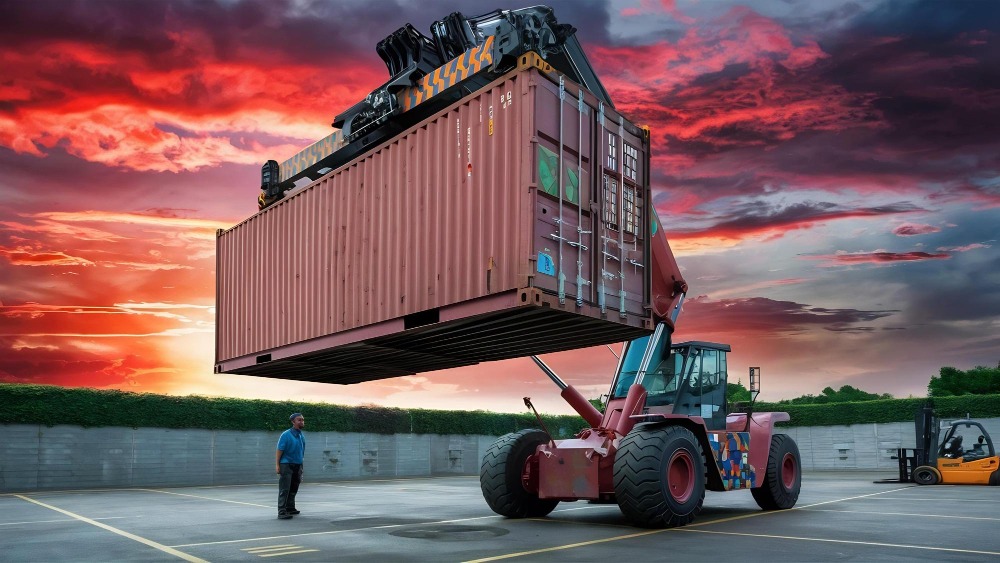
Equipment Must Match Engineering Reality
Equipment selection in UAE project cargo logistics is never interchangeable.
Low-bed and lowboy trailers are commonly used to manage height restrictions on urban roads. Extendable trailers support long components such as structural beams or turbine blades. Multi-axle hydraulic trailers distribute extreme weight more evenly, reducing stress on roads and bridges.
For ultra-heavy or sensitive modules, Self-Propelled Modular Transporters (SPMTs) are often required—particularly within ports, industrial zones, and large project sites.
Incorrect equipment configuration increases risk not only to cargo but also to public infrastructure. Center-of-gravity analysis, axle spacing, and dynamic load calculations are standard considerations in UAE approvals. An experienced International shipping company evaluates these technical factors together with route and regulatory constraints before deployment.
Technology Is Reshaping Risk Management
While physical securement remains essential, oversized cargo movements in the UAE increasingly rely on real-time data.
IoT sensors monitor tilt, vibration, and structural stress during transit. GPS tracking provides continuous visibility across ports, highways, and border points. Integrated communication systems help coordinate escorts, terminal operators, and transport teams.
Early detection of instability allows corrective action before damage occurs—reducing insurance exposure and project delays.
Insurance itself requires careful structuring. Standard cargo policies may not fully cover oversized or high-value project cargo. Coverage terms must reflect cargo complexity, multimodal handling, and regional risk factors. This integrated approach to risk management has become standard among experienced International shipping company partners operating in the UAE.
Cost Efficiency Requires Planning Discipline
Oversized cargo transport is inherently costly, but many expenses are avoidable.
Dimensional surcharges, delayed permits, documentation gaps, and port demurrage frequently inflate budgets in UAE ports and terminals. In some cases, partial disassembly allows components to move via open-top or flat-rack solutions instead of full breakbulk handling—reducing freight classification and handling costs.
Early customs registration and advance permit submission help prevent dwell charges, especially in high-volume ports such as Jebel Ali where time thresholds are strictly enforced.
In project cargo logistics, cost control is achieved through early coordination—not reactive correction.
Sustainability Is Now Operational, Not Optional
Environmental accountability has become part of oversized cargo planning in the UAE.
Global emissions frameworks increasingly affect maritime legs of project cargo shipments. Vessel selection, routing choices, and transit speed now influence compliance exposure and operating costs. Many breakbulk and heavy-lift carriers servicing UAE ports are transitioning toward LNG-powered or methanol-ready fleets.
Sustainability decisions are no longer separate from logistics planning. They directly affect regulatory acceptance, project approvals, and long-term cost structures.
Closing Perspective
Oversized cargo logistics in the UAE has evolved into a highly coordinated discipline that blends engineering, regulatory planning, digital monitoring, and financial risk control.
As infrastructure expansion, renewable energy projects, and industrial development continue across Dubai and the wider region, demand for controlled heavy cargo transport will only increase. Success depends on preparation, technical validation, and alignment with local regulatory frameworks.
Partnering with an experienced International shipping company operating within the UAE provides the operational stability required for complex project cargo movements. In 2026, resilience in oversized cargo logistics is built through foresight—not correction.
FAQs
No. Oversized cargo requires specialized equipment, engineering assessments, and regulatory approvals to manage risks related to infrastructure limits, safety, and cargo stability.
The UAE has strict transport regulations, urban infrastructure constraints, and permit requirements across emirates. Careful planning is essential to avoid route restrictions, delays, or penalties.
Yes. Physical route surveys are often required to assess bridge capacity, road strength, turning radius, and clearance levels before movement approval is granted.
Permits are usually required from transport authorities in each emirate involved, covering route approvals, escort vehicles, and approved movement time windows.
Oversized cargo may be transported by road using specialized trailers, by sea via breakbulk or heavy-lift vessels, or through multimodal solutions depending on size and destination.
GPS tracking, IoT load sensors, and digital route simulations help monitor stability, identify risks early, and improve coordination across ports and road networks.
Forward Air Cargo offers hands-on experience in managing oversized shipments within the UAE, including route planning, permit coordination, and regulatory compliance, helping ensure safe and efficient cross-border movement.