

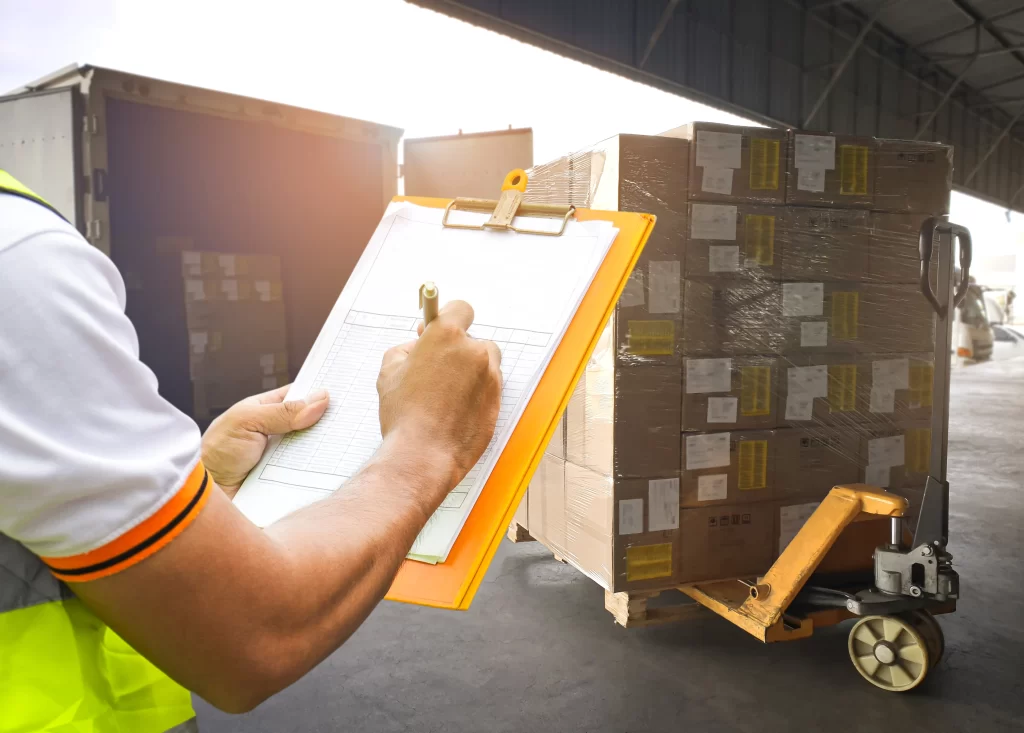
What is Dubai Customs Clearance?
Dubai Customs is the authority responsible for the import, export, and transit of merchandise into and out of Dubai. It ensures compliance with UAE federal legislation and local customs regulations.
Main duties of Dubai Customs:
- Enforce trade legislation and promote public security
- Charge customs duties and taxes
- Regulate import of banned or restricted merchandise
- Ensure free flow of legitimate commerce
The procedure involves:
- Verification of documents
- Payment of tax and duty
- Physical examination (if necessary)
- Granting of entry
Customs clearance is needed for every category of imports, whether they are:
- Imported to Mainland Dubai
- Shipped into a Free Zone
- Entering for transit or temporary use
- Being re-exported from Dubai
Why It Matters?
Dubai Customs Clearance done correctly ensures:
- On-time delivery of your cargo
- Prevention of fines or confiscation
- Smooth transit to end destinations
- Improved compliance with UAE trade laws
Delays or mistakes can lead to excessive demurrage charges and possible business losses, particularly if your cargo is time-sensitive.
Step-by-Step Import Process in Dubai
Here’s the import procedure followed in Dubai, step by step:
- Registration with Dubai Customs & IE Code
To make imports, companies are required to register with Dubai Customs and take a Customs Client Code, or an Import-Export Code (IE Code).
Documents needed:
- Trade license
- Copy of passport of the authorized individual
- Emirates ID
- Tenancy contract or Ejari
- Email & contact details
Where to apply: Dubai Trade Portal(www.dubaitrade.ae)
- Identify the Type of Import
Imports can be classified into a number of categories:
- Import to Local Market (Mainland)
- Import to Free Zone
- Import for Re-export
- Import for Temporary Admission
- Transit Through Dubai
All of these have their own procedures and taxation rules, as elaborated below.
- Collect Essential Documents
- Commercial invoice (with currency and product description)
- Packing list
- Bill of Lading or Air Waybill
- Certificate of origin
- Delivery order from shipping line
- IE code registration certificate
- Import permits (for restricted goods)
- Trade license copy
- File Customs Declaration
A declaration is filed electronically through Dubai Trade, and all supporting documents are attached.
- Inspection & Clearance
Your shipment can be inspected by Dubai Customs. If compliant, you will be issued a customs clearance certificate. Pay customs duties, VAT, and service charges as applicable.
Mainland vs Free Zone Customs Clearance
 Mainland (Local Market)
Custom duty = 5% of CIF value
5% VAT on most items
Certain items such as tobacco, liquor, and sugary drinks attract excise duties (50–100%)
Goods are cleared and brought into the local market
️Free Zone (FZ)
Imported goods into Free Zones are not dutiable if they remain inside the zone. If transferred from Free Zone to Mainland, the same 5% customs + 5% VAT
Requires:
- Import declaration to Free Zone
- Free Zone Delivery Order
- Free Zone Gate Pass
- Free Zones operate according to GCC Unified Customs Law
GCC Imports & Makasa System
Commodities imported from GCC countries like Saudi Arabia or Oman come under the Makasa system, a system where customs charges are levied only once for the whole GCC area.
To import into Dubai from GCC:
- Submit statistical export declaration
- Attach Makasa stamp
- Send shipping documents and origin proof
 ️ Prohibited & Restricted Goods
 ️ Prohibited & Restricted Goods
Prohibited Items:
- All types of narcotic drugs
- Gambling equipment and machineries.
- Nylon fishing nets.
- Live swine.
- Used, reconditioned and inlaid tires.
- Radioactivity and nuclear fallout-contaminated materials.
- Materials or content inconsistent with Islamic morals and public norms.
- Paan and betel leaves.
- Materials prohibited under UAE customs or laws are prohibited outright.
Prohibited or Restricted Items (need special permits):
- Pharmaceuticals – MOHAP
- Food stuff – Dubai Municipality
- Cosmetics or skin care – ESMA
- Chemicals – Ministry of Climate Change & Environment
- Telecom devices – TRA
- Fireworks and explosives – Ministry Of Defence
- Nuclear products related to nuclear energy – FANR
- New tires /E-cigarettes and electronic hookah- ESMA
- Alcoholic drinks- Dubai Police
- Rough diamonds – UAE Kimberley Process office
Common Mistakes to Avoid
 Common Mistakes to Avoid
- Misclassifying HS codes (can lead to fines)
- Missing delivery orders
- Omission of import permits for controlled items
- Delayed IE code registration
- Incorrect declaration type (FZ vs Mainland)

How Forward Air Cargo Can Assist
Forward Air Cargo provides comprehensive import services assistance for:
- IE code registration
- Preparation of documentation
- Calculation of duty and VAT
- Customs brokerage and clearing
- Regulatory clearance
- Free zone to mainland transfers
- Re-export and transit arrangements
With us, you have smooth, compliant, and quick customs clearance so your shipments arrive at their destination on time and penalty-free.
Need Help with Dubai Customs Clearance?

Don’t let processes and paperwork hold your business back. Whether importing to Mainland, Free Zone, or re-exporting to the GCC, Forward Air Cargo facilitates efficient customs clearance from warehouse to port.
 Visit our website to learn more or contact our team for personalized support.